News
新闻资讯

News
新闻资讯
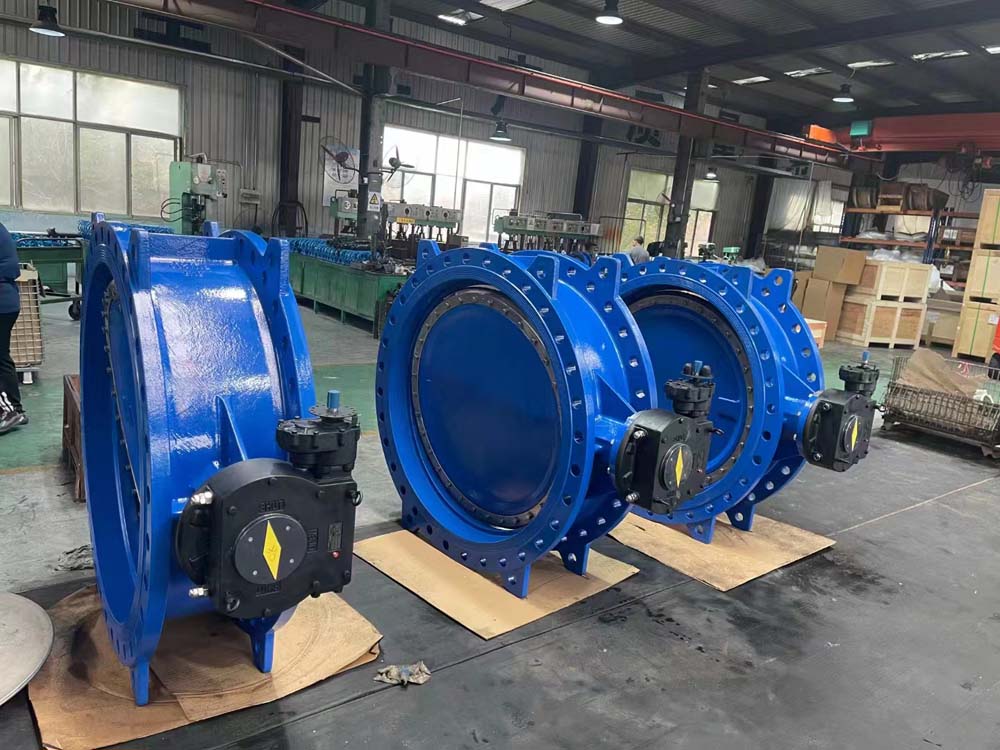
Stainless steel ball valve is a commonly used valve instrument, mainly used for cutting off, distributing and changing the flow direction of media. It has the advantages of simple structure, small volume, light weight, low fluid resistance, and easy maintenance. Stainless steel ball valves require certain maintenance during use to ensure their normal operation. So how to maintain stainless steel ball valves? Today, the editor will introduce the maintenance methods of stainless steel ball valves in detail.
Maintenance operation of stainless steel ball valve:
Firstly, after the rough finished product is pickled, it must be rinsed clean. If there are sand holes or perforations, argon arc welding should be used for gas shielded welding. Then polish and perform solid fusion treatment;
Secondly, after the finished product is processed and pressure tested. It should be rinsed with water containing rust proof powder.
Thirdly, try to use wooden boxes for packaging during transportation and avoid contact with metal products.
Fourthly, after installing the pipeline, regular maintenance and upkeep should be carried out, such as regularly applying lubricating oil to the valve stem. Open and close the valve appropriately several times. Make it difficult for the inner ball, valve stem, and sealing surface to assimilate.
Stainless steel ball valves generally have two structures: reduced diameter and non reduced diameter channels. Regardless of the structure, the flow resistance coefficient of ball valves is relatively small.
Especially for the so-called full flow type, that is, non reducing ball valves, due to their channel diameter being equal to the inner diameter of the pipeline, the local resistance loss is only the frictional resistance of the same length of pipeline, which means that among all valves, this type of ball valve has the smallest flow resistance. In rocket launch and testing systems, it is required that the resistance of the conveying pipeline be as low as possible.
There are two ways to reduce the resistance of pipeline systems: one is to reduce the fluid flow rate, which requires increasing the pipe diameter and valve diameter. This often has adverse effects on the economy of pipeline systems, especially for low-temperature transportation systems (liquid hydrogen).
(1) Reducing the local resistance of the valve makes ball valves the best choice.
(2) The opening and closing switch of the ball valve is fast and convenient.
Due to the fact that ball valves generally only require a 90 ° rotation of the handle to complete the fully open or fully closed action, it is easy to achieve rapid opening and closing. It can achieve fast opening and closing, with some structures having an opening and closing time of only 0.05-0.1s, to ensure its use in the automation system of the test bench. When quickly opening and closing the valve, there is no impact during operation.
(3) The ball valve has good sealing performance.
The majority of ball valve seats are made of elastic materials such as polytetrafluoroethylene, and a sealing pair composed of metal and non-metal materials is commonly referred to as a soft seal. Generally speaking, the sealing performance of soft seals is easy to ensure, and the requirements for the machining accuracy and surface roughness of the sealing surface are not very high.
(4) Ball valves have a long service life.
Due to the excellent self-lubricating properties of polytetrafluoroethylene, there is minimal friction and wear with the ball. Additionally, with the improvement of the ball processing technology, the roughness has been reduced, thereby increasing the service life of the ball valve.